The Camera's Quiet Edits: A Room-by-Room Guide to Reading Listing Photos Before You Tour
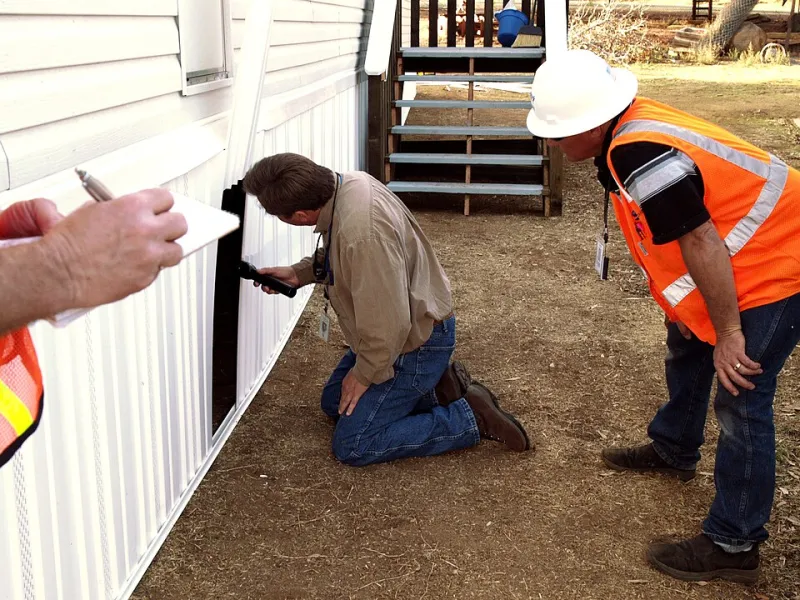
Photo: Unidentified author, Public domain, via Wikimedia Commons
Listing photographs are an argument, not a record. They are composed to answer a buyer's first question — should I spend a Saturday touring this house? — and they are edited, lit, and framed to make that answer yes. That is not a scandal. It is marketing. But in 2026, when virtual staging, twilight composites, and wide-angle lenses are standard tools, a buyer needs a disciplined method for separating atmosphere from architecture.
The approach below treats each photo as a claim to be verified. You do not need to become a photographer. You need to notice what the camera chose to leave out, then check those omissions against floor plans, satellite imagery, raw video, and your own eyes at the property.
Start With the Geometry of the Frame
Wide-angle lenses are the default because they make rooms look larger. A moderate wide angle can be honest enough; a fisheye or heavily corrected lens is another matter. Look at vertical lines near the edges of the frame. Door frames should stand straight. If they bow outward, lean inward, or curve like a barrel, the image has been stretched. Furniture near the perimeter may look elongated. A round dining table may become an oval. A standard three-foot doorway may appear wide enough for a piano.
The practical check is proportion, not aesthetics. Ask for a floor plan with room dimensions. Compare the listed width of the living room to the apparent width of the sofa. A nine-foot sofa in a twelve-foot room leaves little walking space, no matter how spacious the photo feels. Standard counter heights, door widths, and window sizes are also useful anchors. If the kitchen island looks six feet deep but the floor plan says thirty inches, the lens is doing the talking.
Twilight, Weather, and the Disappearing Neighbor
Twilight photography is popular for a reason: it makes a house look warm, occupied, and complete. It can also hide a great deal. A low sun angle and a bright sky can mask a busy road, a commercial lot, or a neighboring structure that would be obvious at noon. The warm interior glow pulls the eye inward, away from the view through the windows.
Look for inconsistencies. Shadows should agree with the light source. Window reflections should make sense. Lawns should not be a uniform emerald in a region coming out of a dry summer. Clouds should not repeat in a pattern. If the sky looks painted and the foreground looks over-lit, assume the image is a composite until proven otherwise. Satellite imagery and street-level maps can show what sits beyond the frame. A visit at the same hour can confirm what the twilight shot was designed to soften.
Virtually Staged Rooms and the Missing Shadows
Virtual staging can be useful. It helps buyers see scale in an empty room, and it can make a vacant property easier to read. The problem is not the practice; it is the ambiguity. Some listings label virtual furniture clearly. Others do not. Your first task is to ask which photos show real furnishings and which show digital ones.
Digital furniture often leaves clues. Look for shadows that do not match the room's light. Check whether a bed or sofa appears to float slightly above the floor. Rug edges may disappear under a wall. Outlet covers, floor vents, and baseboards may be covered by furniture that could not physically sit there. Reflections in mirrors or windows may show an empty room behind the camera. Plants may be perfectly symmetrical. Art may be scaled too large for the wall.
Ask for the unfurnished photo set or a raw walk-through video. A seller or listing agent who has nothing to hide should be able to provide one. If the response is vague, treat the room's livability as unverified.
What the Crop Leaves Out
Ceilings are a common casualty. A photo cropped just above the window trim can hide a low ceiling, a dropped soffit, exposed ducts, or a sloped roofline. Beams may vanish. A room that looks airy in a horizontal frame can feel compressed in person. Request a photo that shows the full wall from floor to ceiling, or check the floor plan for ceiling notes.
The same logic applies outside the windows. A tight crop can exclude power lines, a water tower, a parking lot, or the side of a neighboring building. It can also hide the fact that the backyard backs onto a commercial property. Satellite imagery is your best first check, but pay attention to the date of the image. A 2026 listing should be compared against current maps and, where possible, recent street-level imagery. On arrival, stand in each room and look out every window. The view is part of the property.
Build a Verification File
Before touring, assemble a small file for each property. Request the floor plan with dimensions, the full photo set, and any raw video the listing agent can share. If a three-dimensional tour is available, use it to check sightlines and room relationships. Ask whether the photos have been virtually staged or digitally enhanced. These are ordinary questions in 2026, and a professional listing side should answer them directly.
Then cross-check. Satellite maps confirm neighboring structures and lot lines. Street-level imagery confirms the approach to the house. The seller's property disclosure may confirm past water intrusion, additions, or unpermitted work. A second set of eyes is equally valuable: bring a friend who has not been primed by the photos, or ask your Kunal Realty Services agent to flag anything that looks different in person.
A Room-by-Room Reading
In the living room, check ceiling height, window views, and furniture scale. In the kitchen, compare appliance widths, counter depth, and the distance between the island and the cabinets. In bedrooms, verify closet depth, egress windows, and whether the bed shown could actually fit with a dresser. In bathrooms, look for ventilation, fixture spacing, and signs that a wide lens has made a tight room look generous. Outside, compare the photographed façade to the actual roofline, driveway, and neighboring buildings.
The Tour Is the Correction
Listing photos begin the conversation; they should not end it. Use them to decide where to look, not what to believe. A house that survives the camera's quiet edits — and your own verification — is a house worth considering on its architecture rather than its atmosphere.