Priced In Before the Rain: Why Climate Risk Is Already Inside Your Home's Value

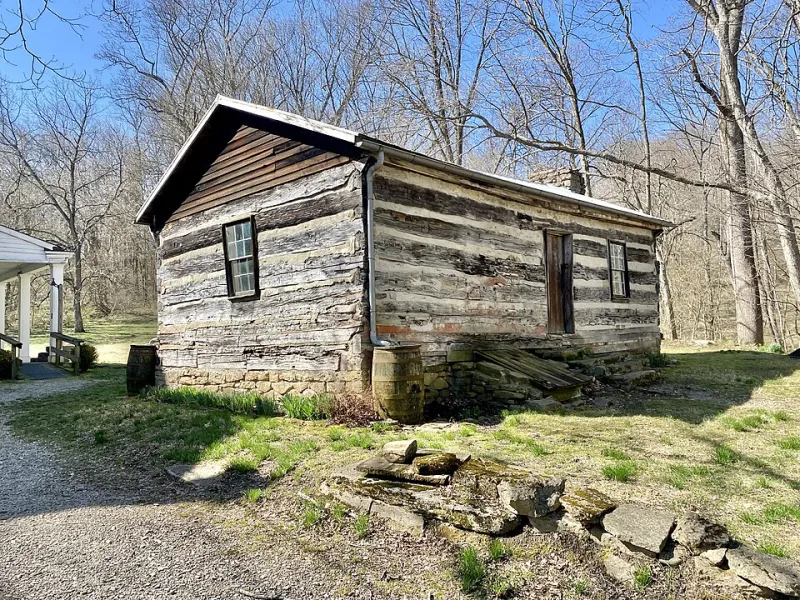
Photo: Joe Mabel, CC BY-SA 4.0, via Wikimedia Commons
For most of the twentieth century, a home's value rested on three pillars: location, condition, and comparable sales. A fourth pillar has quietly joined them — climate risk — and in many markets it is already moving prices. At Kunal Realty Services, we have watched buyers walk away from otherwise perfect homes over a single insurance quote, and sellers discover that a property two blocks outside a flood zone commands a measurable premium over one just inside it. The weather hasn't changed. The paperwork has.
The Market Moved Before the Water Did
The most important thing to understand about climate risk and real estate is that it does not wait for a hurricane or a wildfire to make itself felt. It arrives through three intermediaries: insurers, lenders, and eventually, appraisers.
Insurers are the first movers. In Florida, Louisiana, and California, carriers have withdrawn from entire regions or priced policies so steeply that monthly housing costs are transformed. When a homeowner's insurance premium doubles, the buyer's qualifying budget shrinks — which means the same house effectively becomes less affordable, and therefore worth less, without a single brick moving.
Lenders follow. Federal rules increasingly require lenders to account for hazard exposure, and in high-risk flood zones, federally backed mortgages require flood insurance as a condition of the loan. That requirement shows up in the buyer's debt-to-income calculation, again tightening what they can pay.
Finally, the resale market absorbs all of it. Studies of coastal counties have repeatedly found that homes exposed to sea-level rise sell at a discount of several percentage points compared with equivalent properties that are not exposed — even when neither property has ever flooded. Appraisers, now armed with climate analytics, are beginning to reflect the same logic in valuation reports.
The Tools Every Buyer Should Check — Before Making an Offer
The encouraging news is that most of this information is free and takes less than an hour to review. Any serious buyer should run the following checks:
FEMA Flood Maps. Search the property address at FEMA's Flood Map Service Center. Zones beginning with A or V indicate special flood hazard areas where flood insurance is mandatory for federally backed loans. Note that these maps are updated irregularly and often lag behind current conditions, so treat them as a floor, not a ceiling.
First Street Foundation's Risk Factor scores. Available through climate-risk websites and even embedded in many listing platforms, these models score flood, fire, heat, wind, and air-quality risk property by property — and they frequently flag risk that FEMA maps miss, particularly in areas where floodplain boundaries have shifted.
State forestry and wildfire hazard maps. In California, Colorado, and other Western states, fire hazard severity zone designations can affect both insurance availability and disclosure obligations at sale.
Insurance quotes, obtained early. The single most revealing step: ask an independent agent for a hypothetical premium quote on the property before you go under contract. If the number shocks you, better to learn it in week one than at the closing table.
Reading the Results Without Panic
A high risk score is not automatically a deal-breaker; it is a negotiating input. Elevation certificates, for example, can dramatically reduce flood premiums for homes built above base flood elevation. Mitigation matters too — defensible space and ember-resistant venting in fire country, or elevated mechanical systems in flood plains, can meaningfully lower both risk and cost. The question is not simply "is this property exposed?" but "what is the documented, priced cost of that exposure?"
A Playbook for Sellers
If you are selling a home with elevated climate risk, silence is the worst strategy. Disclosure laws in most states already require you to reveal known hazards, and buyers will find the data anyway. Better to control the narrative:
- Order the insurance quote yourself and present it in the listing materials. A known, reasonable premium is far less frightening than an imagined one.
- Document every mitigation measure — sump pumps, elevation work, roof upgrades, cleared defensible space — with receipts and photographs.
- Price to the data. If comparable homes outside the flood zone sell at a premium, your listing agent should position accordingly rather than chase the market downward after 100 days of silence.
The Bottom Line
Climate risk has become a line item in the American housing equation, computed long before any storm makes landfall. Buyers who check the data early protect both their budgets and their future resale value. Sellers who address it proactively protect their sale price. In either direction, the map won't save you — but knowing how to read it just might.