Dead Listings Don't Lie: What 200 Days on the Market Reveals About Price
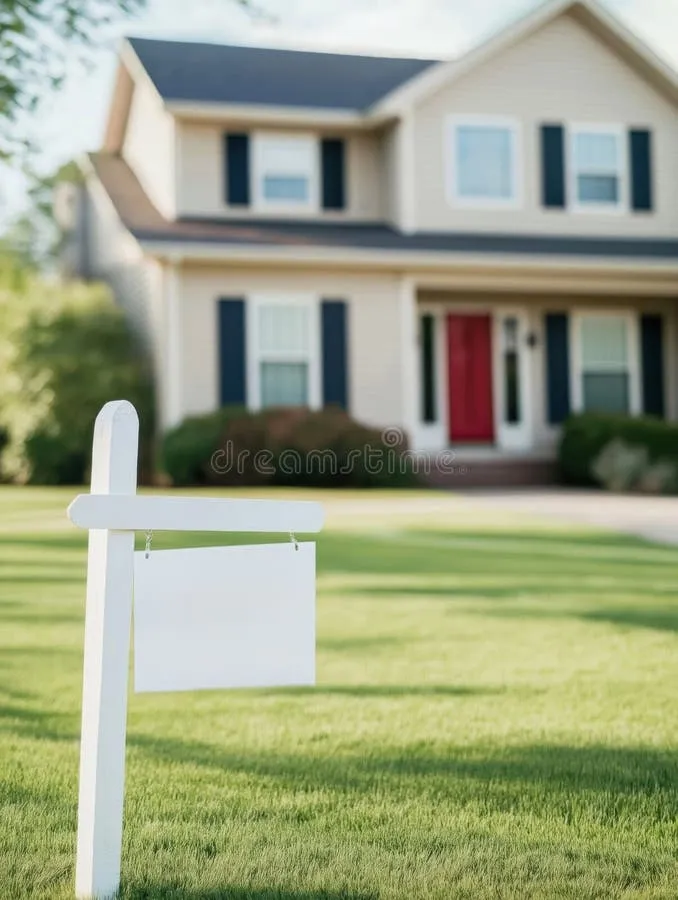
Photo: empty suburban house for sale with for sale sign overcast day, via thumbs.dreamstime.com
Every market has them: the properties that appear season after season, their listing photos sun-bleached from years of rotation, their price history reading like a slow-motion concession. In an environment where well-priced homes still move in a matter of weeks, a listing that crosses the 200-day mark is no longer a curiosity. It is a data point — often the most honest one on the block.
The Anatomy of a Stale Listing
Stale listings rarely fail for a single reason. More often, they follow a recognizable arc. A home debuts above the neighborhood's last three comparable sales, justified by an aspirational renovation or an emotional attachment to a number. Showings taper after the first month. A modest reduction follows — 2 or 3 percent, enough to signal movement but not enough to change the calculus. By day 120, the listing has become background noise, and by day 200, agents stop bringing buyers at all.
The numbers bear this out. Industry analyses consistently show that homes priced within 5 percent of recent comparable sales sell in a fraction of the time of homes priced 10 percent or more above them. The penalty for overpricing is not merely time; it is money. Sellers who chase the market down with successive cuts routinely net less than those who priced correctly at launch.
The Relist Game — and How to Spot It
One increasingly common maneuver deserves particular attention: the withdrawal-and-relist. A seller whose listing has expired pulls the home for a few weeks, then returns it to the market with a fresh MLS number and, sometimes, a fresh coat of paint in the photos. The days-on-market counter resets to zero. Buyers scrolling listings see a 'new' property rather than a seven-month veteran.
Savvy buyers should treat a clean listing history as a claim to be verified, not a fact. Public records, price-history tools, and a direct question to the listing agent will usually reveal prior listings. A relist is not inherently a red flag — sellers are entitled to a second act — but it should inform your offer. A seller on their second attempt after 200 accumulated days has demonstrated, in the most concrete way possible, that their price expectations have met the market's resistance.
What Agents Who Revive Dead Listings Know
Agents who specialize in resurrecting tired listings tend to share a common diagnosis: the original price was set by hope rather than evidence. Their revival playbook is instructive for both sides of the transaction.
- Reposition, don't just reduce. A meaningful price correction — often 8 to 12 percent below the last asking price — restarts the algorithm, triggers new-alert notifications, and reframes the home as an opportunity rather than a question mark.
- Refresh the presentation. New photography, updated staging, and rewritten copy signal renewed intent. Buyers notice when a listing stops looking abandoned.
- Time the relaunch. Reintroducing a property on a Thursday, ahead of weekend showing traffic, outperforms mid-week refreshes.
- Address the silent objections. If a home has accumulated 40 showings and zero offers, the problem is rarely marketing. It is price, condition, or location — usually price.
A Checklist for Detecting Pricing Delusion
Whether you are preparing to list your own home or evaluating one as a buyer, a short diagnostic can separate realistic pricing from wishful thinking.
- Compare days on market, not asking prices. If nearby homes are going under contract in 30 days and this one is at 150, the market has already voted.
- Count the cuts. Multiple small reductions often indicate a seller inching toward reality; they may have further to travel.
- Check the price per square foot against closed sales, not competing listings. Askings are opinions; closings are facts.
- Ask why the last deal fell through, if one did. Inspection disputes and financing failures leave fingerprints on the disclosure record.
- Audit the photos for age. Seasonal landscaping that doesn't match the current season is a quiet confession of a long tenure on the market.
The Lesson Beneath the Price Cuts
The market is impersonal but not mysterious. A home that sells quickly at a fair number and a home that languishes for a year are responding to the same forces; only one of them listened. For sellers, the takeaway is that the first 30 days are the most valuable listing window you will ever have, and spending them testing an aspirational price is the costliest experiment in real estate. For buyers, a stale listing is not a defective property — it is frequently a motivated seller wearing a patient disguise. The house that time forgot is, more often than not, simply waiting for someone to name the right price.