Decade-Proof Living: The Case for Buying a Home That Adapts to Every Stage of Life
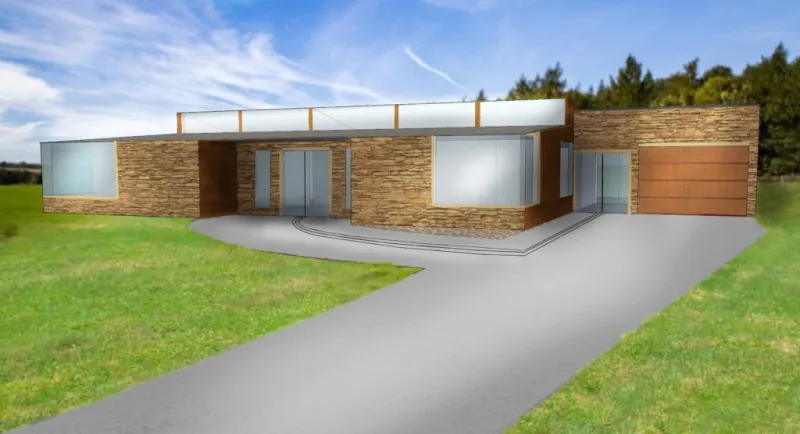
Photo: modern single-story home entry with no steps universal design, via universaldesign.org
Most buyers tour homes with a five-year mindset. Will the kitchen work for weekend entertaining? Is there room for a home office? These are fair questions, but they miss a larger one: how will this house serve you in ten, twenty, or thirty years?
The answer, more often than not, is determined by design choices most buyers barely register during a showing — the height of a threshold, the swing of a bathroom door, the number of stairs between the bedroom and the laundry. At Kunal Realty Services, we've watched a quiet shift in buyer priorities over the past several years, and universal design has moved from a niche concern to a genuine differentiator at resale.
What Universal Design Actually Means
Universal design isn't a clinical, hospital-style retrofit. It's a set of building principles that make a home usable by the widest range of people without calling attention to itself. A zero-step entry doesn't announce itself as an accessibility feature; it simply means you never trip over the front stoop carrying groceries.
The core elements include:
- Zero-step or low-threshold entries at the primary entrance
- Doorways at least 32 to 36 inches wide, with hallways to match
- A primary bedroom on the main floor, ideally with a full bath
- Reinforced blocking in bathroom walls for future grab bars
- Lever-style door handles instead of round knobs
- Curbless or roll-in showers rather than tub-only configurations
- Adequate lighting, particularly at entries, stairs, and transitions
When done well, these features benefit everyone — the parent pushing a stroller, the homeowner recovering from a ski injury, the delivery driver with arms full of packages.
Why the Market Is Shifting
The demographics are unavoidable. Roughly 10,000 Americans turn 65 every day, and AARP surveys consistently show that the overwhelming majority of older adults want to remain in their own homes. Meanwhile, multigenerational households are on the rise, driven by housing costs and cultural preference alike.
Yet the housing stock hasn't caught up. Only a small fraction of American homes offer even basic accessibility features, according to Harvard's Joint Center for Housing Studies. That scarcity creates an opportunity: homes that genuinely support aging in place command attention, sell faster in many markets, and appeal to a broader pool of buyers than the standard two-story with a ladder of a staircase.
There's also a financial argument. Retrofitting a home after the fact is expensive — adding a first-floor bath or a ramp can run into five figures. Paying modest attention to these features at purchase is almost always cheaper than building them in later.
The Decade-Proof Checklist
Whether you're 35 or 65, take this list to your next showing. You're not evaluating the home for today — you're evaluating it for the decades ahead.
1. The approach. Can you reach the front door without steps? Is the walkway wide and well-lit? A gentle grade from driveway to door is worth more than a landscaped entry you can't navigate in icy weather.
2. The main floor. Is there a bedroom, a full bathroom, and a laundry area on the entry level? A two-story home can still be decade-proof if these essentials exist downstairs.
3. The doors. Stand in the hallway and eyeball the widths. Thirty-two inches is the minimum; 36 is better. Note any tight turns between rooms.
4. The bathrooms. Look for curbless showers, space for a future grab bar (look for solid wall framing behind tile, or ask), and room to turn a wheelchair if it ever comes to that.
5. The kitchen. Varied counter heights, pull-out shelving, and clear circulation paths matter more than granite. Check whether the layout allows a seated work zone.
6. The stairs. If the home has them, is there space and structural capacity for a future stair lift? Are the treads consistent and well-lit?
7. The flooring. Slip-resistant surfaces, minimal level changes between rooms, and low-pile carpet all earn points.
8. The tech and mechanicals. Smart thermostats, voice-controlled lighting, and a tankless water heater located on an accessible floor all add long-term convenience.
If the Perfect House Isn't Perfect
Few existing homes will check every box, and that's fine. The right question is how costly the gaps are to close. A missing lever handle is a weekend fix. A missing first-floor bathroom is a construction project. Rank the deficiencies by price and disruption, and bring your contractor's estimates into your offer strategy.
New construction is another avenue worth exploring. Many production builders now offer universal design packages at a fraction of the retrofit cost, and some communities in fast-growing metros — from the Carolinas to Arizona — market age-friendly floor plans as a headline feature rather than an afterthought.
The Bottom Line
A home that adapts to your life — not the other way around — is the definition of a sound real estate investment. Universal design doesn't just future-proof your daily routine; it widens your eventual buyer pool when it's time to sell. In a market where differentiation matters, the house that works for every stage of life is, quite simply, the smartest upgrade most buyers aren't making.
Before your next tour, print the checklist above. Your future self will thank you — and if you'd like a second opinion on a listing, our team at Kunal Realty Services is glad to walk it with you.