The Paper Trail and the Paint: Forensic Clues That Reveal How a House Was Really Treated
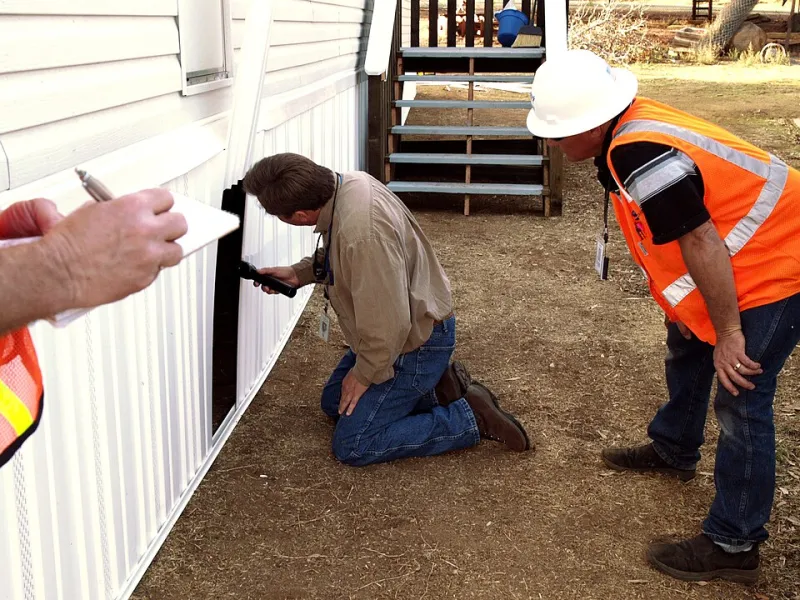
Photo: Amanda Bicknell, Public domain, via Wikimedia Commons
Every house keeps a record of how it was treated. Not in a filing cabinet, but in its systems, its surfaces, and its paperwork. Buyers who learn to read these records gain something no listing sheet can provide: an honest account of whether the home was stewarded or merely dressed for sale.
At Kunal Realty Services, we encourage every client we represent to approach a promising property the way an experienced inspector does — with curiosity, patience, and a healthy respect for what is not immediately visible. What follows is a practical framework for conducting that investigation.
Start With the Paper, Not the Paint
The most reliable maintenance history lives in public records, and most of it is free to access. Municipal building departments maintain permit files for every property in their jurisdiction, and these files are often searchable online or available with a short phone call.
What should you look for? A healthy permit history shows a pattern: a roof replacement permitted and closed out properly, electrical work signed off by the city, water heater installations with final inspections. A thin or absent permit file is not automatically a red flag — some routine work does not require permits — but major projects completed without them suggest either an owner cutting corners or work that could not have passed inspection.
Ask the seller's agent directly for disclosure documents, prior inspection reports, and invoices from contractors. A well-maintained home usually comes with a folder. An owner who cannot produce a single receipt for a furnace they claim was replaced two years ago deserves a closer look.
Let the Utility Bills Talk
Few documents reveal a home's true condition as candidly as its energy history. Ask for twelve months of utility statements, or request usage data directly from the local provider — many electric and gas companies will release average monthly consumption to prospective buyers with the seller's permission.
High heating costs in a moderately sized home can point to inadequate insulation, aging windows, or an HVAC system working harder than it should. Seasonal spikes may reveal an air conditioner on its last legs. Compare the numbers against similar homes in the neighborhood, and treat significant deviations as a question the seller should be prepared to answer.
Read the Surfaces Like Chapters
Physical walkthroughs reward the observant. Fresh paint in a single room, or paint that stops abruptly at an outlet cover, often marks the concealment of a water stain or crack. Run a palm along walls near windows and below bathrooms; soft drywall and slight bubbling tell a story the previous owner would rather you skip.
Look at the details that cost nothing to maintain but require consistent attention. Are the gutters clear and firmly attached? Is the caulking around tubs and sinks intact and not layered over mold? Do exterior grades slope away from the foundation? These small signals, taken together, describe a household's habits with surprising accuracy.
Flip-flops in the flooring can be equally telling. A flipped property frequently features brand-new laminate over original subflooring, gleaming fixtures in bathrooms with original galvanized supply lines behind them. New finishes are not a sin — but new finishes paired with deferred mechanical work is a classic signature of a cosmetic renovation.
Questions That Cut Through the Script
Listing sheets answer the questions agents expect. Your job is to ask the ones they don't. Consider:
- Who performed the major work — licensed contractors or the owner? Owner-performed electrical and structural work warrants independent evaluation.
- When was the roof last replaced, and is there a transferable warranty?
- Has the home ever had water intrusion or a documented insurance claim? Claims history can be requested through a Comprehensive Loss Underwriting Exchange (C-LUE) report.
- Are there warranties on the HVAC, roof, or appliances that transfer at closing?
Sellers in most states are bound by disclosure laws, but disclosures only cover what the seller knows and chooses to reveal. Your questions close the gap.
When the Evidence Points Somewhere Uncomfortable
None of this means a home with a spotty history is off the table. Deferred maintenance is often reflected in the price, and a buyer who understands exactly what they are inheriting can negotiate accordingly — or walk away with confidence rather than regret.
The goal is not to find a perfect house. It is to make sure the price you pay reflects the house that actually exists, not the one presented on a Saturday afternoon with the lights on and the cookies baking.
Bring your findings to a licensed home inspector, and share what you have uncovered before the inspection rather than after. A good inspector will tell you that the best clients are the ones who arrive with questions already in hand.
The house will speak. The buyers who listen are the ones who buy well.