Denied Coverage, Denied Closing: How Insurance Has Become the Silent Gatekeeper of American Home Sales
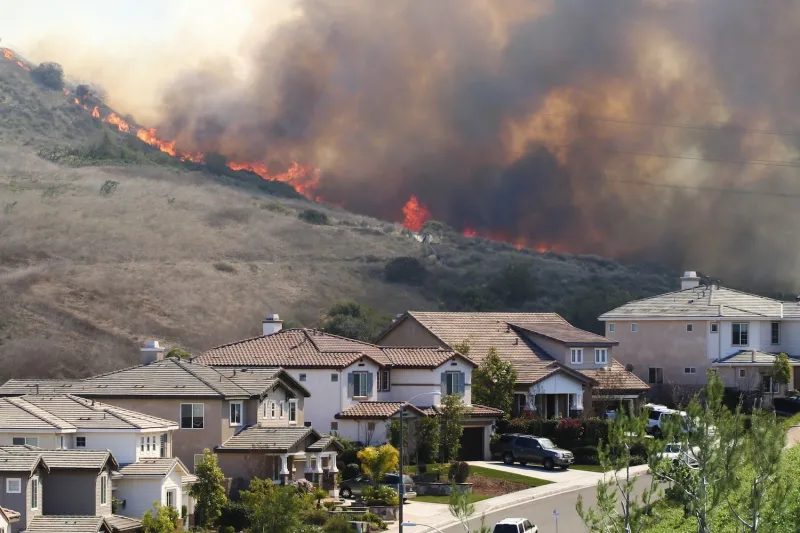
Photo: suburban house wildfire smoke danger residential neighborhood, via s3.amazonaws.com
In most American real estate transactions, the mortgage lender is the party buyers fear most. Credit scores, debt-to-income ratios, appraisal gaps — these are the hurdles buyers prepare for. But a quieter obstacle has emerged in recent years, and it has nothing to do with borrowing power. Increasingly, the deal-breaker is the insurance company.
When a private insurer declines to write a homeowner's policy, a lender will not fund the mortgage. Full stop. A buyer can be emotionally invested, contractually committed, and financially ready — and still watch the transaction collapse because a carrier looked at the property's location, roof age, or claims history and said no.
Why Insurance Now Precedes the Mortgage
Lenders require hazard coverage before closing because the home itself serves as collateral. If no carrier will assume the risk, the loan cannot be issued. This has always been true in theory, but the practical stakes have changed. As catastrophic losses from wildfires, hurricanes, and inland flooding have mounted, national carriers have reevaluated — and in many cases withdrawn from — the markets where those losses concentrate.
The result is a growing category of transaction that agents and lenders refer to informally as an "insurability problem." The buyer qualifies. The appraisal comes in at value. The title is clean. And yet the deal dies in underwriting at an insurance carrier that neither party ever met.
Where the Squeeze Is Tightest
Certain regions are feeling this shift acutely. In California, major carriers including State Farm and Allstate announced pauses on new homeowner policies in 2023, citing wildfire exposure and rising construction costs. Buyers in foothill communities from Grass Valley to the outskirts of Redding have found that the state-backed FAIR Plan, intended as an insurer of last resort, is often the only option — and it requires supplemental coverage for water damage and theft, driving costs well beyond what buyers budgeted.
Florida presents a parallel story shaped by wind and water rather than fire. Property insurance premiums in the state have climbed dramatically, and carriers have non-renewed hundreds of thousands of policies. Coastal counties from Pinellas to Broward have seen the sharpest disruption, but the effects ripple inland through the reinsurance market.
Louisiana, Colorado, and parts of Texas round out the map, with hail, hurricane, and wildfire exposure each playing a role. Even buyers in states far from the coastline are encountering higher deductibles, wind-and-hail exclusions, and carriers demanding roof inspections before binding coverage.
The Anatomy of a Denied Policy
Insurance refusals rarely arrive as a blanket rejection of a neighborhood. More often they turn on specific, fixable — or sometimes unfixable — property characteristics. Common triggers include:
- Roof age and material. A wood-shake roof or an asphalt roof past twenty years can trigger an automatic decline from many carriers.
- Distance from a fire hydrant or station. Rural properties graded 8 or 9 by Public Protection Classification ratings face far fewer options.
- Flood zone designation. Properties in FEMA Special Flood Hazard Areas require separate flood coverage, and some carriers decline the underlying policy outright.
- Prior claims history. A CLUE report showing water damage claims filed by a previous owner can follow the house, not just the homeowner.
- Electrical, plumbing, and heating systems. Knob-and-tube wiring or galvanized piping, common in older housing stock, are frequent decline reasons.
Because many of these details never appear in a listing, buyers can spend weeks in escrow before learning the property cannot be conventionally insured.
Questions to Ask Before You Offer
The most effective protection is simply moving this research earlier. Before writing an offer, serious buyers should:
- Request the home's claims history. Sellers can provide a CLUE report, which documents claims filed on the property over the prior seven years.
- Get an insurance quote before the inspection period ends. A five-minute call to an independent agent — one who writes for multiple carriers — can surface problems while you still have contingency rights.
- Check the FEMA flood map. Search the address at the official Flood Map Service Center and note the zone. Zone X is generally low risk; zones beginning with A or V carry mandatory flood insurance requirements.
- Ask about the roof. Age, material, and last replacement date. This single detail determines insurability in more transactions than any other.
- Investigate the state FAIR Plan. Know what the fallback option costs and what it excludes, in case the private market says no.
- Understand the appraisal's insurance implications. In high-cost markets, replacement-cost estimates have soared, and carriers may decline coverage if the dwelling limit they must write exceeds their appetite.
Writing the Contract With This Risk in Mind
Standard purchase agreements in most states include an inspection contingency, but insurance timelines do not always align neatly with them. Buyers and their agents should consider explicitly building an insurance-review window into the contract — a short period during which the buyer can obtain binding coverage quotes and exit the agreement without penalty if no carrier will write the policy on acceptable terms.
Sellers in high-risk markets can get ahead of this as well. Obtaining a new roof certification, resolving open claims, and making a current insurance quote available to prospective buyers can prevent a late-stage collapse that benefits no one.
The Broader Takeaway
Climate risk is no longer an abstract, long-horizon concern for American home buyers. It is a present-tense underwriting decision made by companies with precise data and little patience for ambiguity. The buyers who navigate this environment successfully are not necessarily the ones with the strongest finances — they are the ones who treat insurability as a condition of the purchase rather than an afterthought.
At Kunal Realty Services, we encourage every client to make one phone call before making an offer: a call to an insurance agent. In today's market, that call may matter as much as the mortgage pre-approval itself.