The Second Visit: What Buyers Notice When the Honeymoon Glow Wears Off
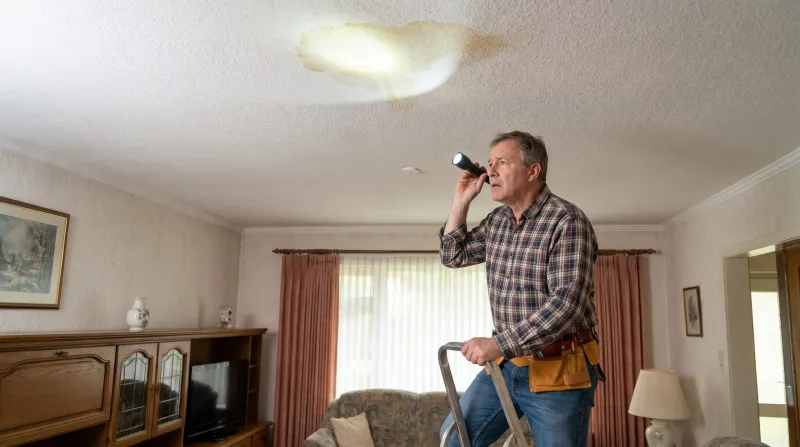
Photo: home buyer inspecting house second viewing flashlight ceiling, via foxhavenroof.com
The first showing is a courtship. The lights are flattering, the sellers have baked something, and your pulse is doing most of the evaluating. Within an hour of leaving, many buyers are already mentally arranging furniture — which is precisely the problem. Emotional momentum, not inspection, drives most first visits.
The second walkthrough is the antidote. It is the hour when the house stops performing and starts being itself. At Kunal Realty Services, we consider it the most underused tool in a buyer's arsenal, and we build it into nearly every offer strategy we advise.
Why the Second Showing Changes Everything
A first visit answers one question: do I like this house? A second visit answers a far more important one: do I understand this house? Research and anecdote agree that buyers who return notice things they completely missed the first time — not because they were careless, but because the brain simply cannot process layout, condition, light, sound, and neighborhood all at once.
Timing matters more than most people realize. A 10 a.m. showing on a quiet Tuesday tells you nothing about the 5:30 p.m. school-bus rush on the street outside, or how the great room looks when the western sun pours through uncurtained windows. Schedule your return for a different time of day, ideally a different day of the week. A Saturday morning visit to a Sunday afternoon listing can feel like two different properties.
What the Excitement Hid
Certain flaws are almost designed to escape a first look. Fresh paint is the classic one — it covers water stains as effectively as it refreshes walls. Bring a flashlight and scan ceilings, especially around light fixtures, in corners, and beneath upper-floor bathrooms. Look at the paint itself: a single newer patch on an otherwise uniform ceiling is a story waiting to be asked about.
Then there is sound. On visit one, you were listening to the agent. On visit two, stand quietly in each bedroom for a full minute. Can you hear the highway two blocks over? The neighbor's dog? The HVAC cycling on and off? Acoustic surprises are among the most common post-purchase regrets, and they are almost entirely discoverable in advance.
Light deserves the same scrutiny. A south-facing kitchen that sparkles at noon may be dim by mid-afternoon. Note where natural light actually falls in the rooms where you will spend your time, and check how many windows need coverings for privacy.
The Second Walkthrough Checklist
Print this, or keep it on your phone:
Inspect
- Ceilings and walls under every light source for stains, patches, or bubbling
- Windows: open and close each one; check for condensation between panes
- Water pressure at every faucet; flush every toilet
- Water heater age and condition; look for rust or staining at the base
- Foundation perimeter, both inside (basement walls) and outside (grading, cracks)
- Attic and crawlspace access points, if accessible
- Age and labels on major systems: furnace, AC, roof
Listen
- Traffic, flight paths, barking dogs, HVAC noise in bedrooms
- Creaking floors and staircases
- Anything running that shouldn't be — sump pumps, humming panels
Ask
- Average monthly utility costs, by season
- Why is the seller moving?
- Any insurance claims on the property in the past five years?
- Have the systems listed above been serviced, and are records available?
Test
- The commute, at rush hour, from the actual driveway
- The walk to the nearest grocery, school, or transit stop
- A lap of the neighborhood at night, on foot, with the windows down
Bringing Your Agent Back In
A second showing is also where your buyer's agent earns their keep. With the emotional filter removed, an experienced agent will spot conversation points you won't — a deck built without visible permits on file, a fence line that doesn't match the plat, a furnace that predates the roof. These observations become either negotiation leverage or deal-breakers, and both are better discovered before you're under contract.
If the second visit raises questions rather than answers, that is not a failure. It is exactly what the hour is for. Some buyers schedule a third visit or bring in a contractor friend for a casual pre-inspection opinion. None of this costs much; all of it protects what is likely the largest purchase of your life.
The first showing tells you whether to fall in love. The second tells you whether to sign. Give it the full hour — and give it your full attention.