Before You Fall in Love: Seven Warning Signs Hiding Behind a Perfect Listing
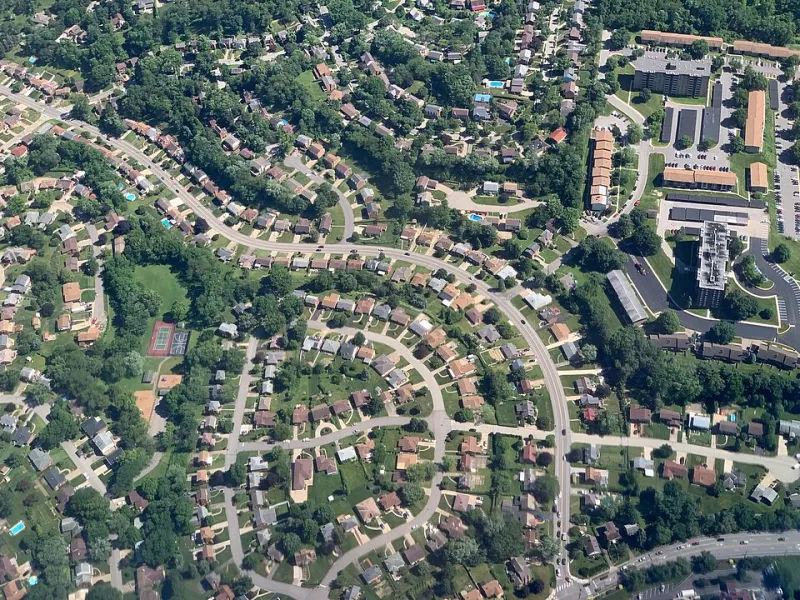
Photo: Tony Webster, CC BY-SA 2.0, via Wikimedia Commons
Professional photography can make almost any property look serene. What it cannot show you is the sound of the freight line at 5:40 a.m., the drainage ditch that becomes a river each March, or the special assessment the HOA board approved last fall. Serious buyers evaluate the neighborhood with the same scrutiny they apply to the house itself.
Here are seven red flags worth investigating — and exactly how to check for each.
1. The Property Sits in a Revised Flood Zone
FEMA flood maps are updated periodically, and homes can shift from moderate- to high-risk designation without the seller ever mentioning it. A flood-zone designation can mean mandatory flood insurance — often $1,000 to $3,000+ annually in higher-risk zones — and weaker resale demand.
How to check: Search the property address on FEMA's Flood Map Service Center. Then cross-reference with your insurer for a quote before you offer, not after.
2. Major Construction Is Planned Next Door
That empty parcel behind the backyard fence? It may already be entitled for a 40-unit apartment building, a self-storage facility, or a distribution center. Zoning is public record — most buyers just never look.
How to check: Visit your city or county's planning department website and search the address for pending permits, rezoning requests, and planning commission agendas. A ten-minute review can reveal what will be built on every adjacent lot.
3. The HOA Is Financially Unhealthy or Overreaching
Homeowners associations carry real power over your wallet and your property rights. Red flags include chronically deferred maintenance, thin reserve funds, pending litigation, and a history of special assessments — or a board that has fined residents over matters most people would consider trivial.
How to check: Request the HOA's resale disclosure package, including budgets, meeting minutes, and rules, before you remove contingencies. Read the minutes; they reveal more than the financials. Ask a current resident, casually, what the board is like.
4. School Boundaries Are in Flux
A home zoned to a top-rated elementary school today may be rezoned next year as districts redraw attendance lines to manage enrollment. For many buyers, this single change can alter both daily life and long-term value.
How to check: Search the district website for "boundary study," "rezoning," or "enrollment redistricting." Call the district's transportation or planning office directly — staff will usually tell you if a study is underway.
5. The Commute Only Looks Good at 10 a.m. on a Saturday
Mapping software estimates drive times under average conditions. Real life happens during a rain-soaked Tuesday at 7:45 a.m., when the highway interchange backs up for two miles.
How to check: Do the commute in person, at the actual hour you'd drive it, in both directions. Do it twice if you can — once in clear weather, once in rain. No app replicates that experience.
6. The Street Transforms After Dark
A block can feel entirely different at 9 p.m. than at 2 p.m. — lighting, noise from nearby commercial strips, and general activity all shift. This is also when you'll notice train horns, bar noise, or a poorly lit stretch that photos never hint at.
How to check: Walk or drive the neighborhood in the evening and late at night. Talk to neighbors outside; most will tell you plainly what they love and what they tolerate.
7. Declining Market Signals the Listing Won't Mention
Rising inventory, lengthening days-on-market, and price cuts on nearby comparable homes can indicate a neighborhood losing momentum — a slow but meaningful drag on your future resale.
How to check: Ask your agent for a six- and twelve-month trend report for the ZIP code: median days on market, sale-to-list ratio, and inventory levels. One data point is noise; a twelve-month trend is a story.
Diligence Is Cheaper Than Regret
None of these red flags is necessarily disqualifying. A flood zone might be manageable with insurance priced in; a planned apartment building might not bother you. The point is not to find a flawless neighborhood — none exists — but to make your offer with full information rather than staged photographs.
Spend a weekend investigating before you spend thirty years paying. The best home purchases are made by buyers who liked the house and respected what the listing didn't show.