Where the Stuff Goes: Why Storage Now Sells Homes Faster Than Granite
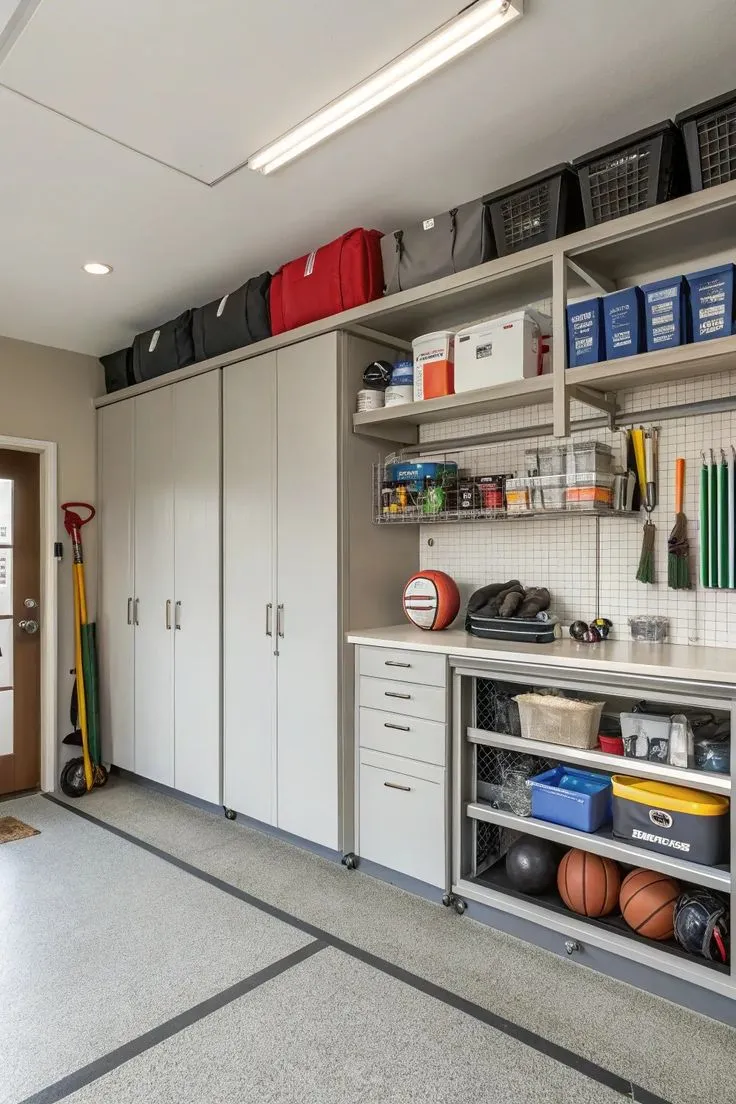
Photo: organized two-car garage with shelving and storage in suburban American home, via i.pinimg.com
For decades, the kitchen was the undisputed king of American home sales. Realtors joked that houses were bought on granite and stainless steel, and staging budgets reflected it. But something has shifted in the past few years, and the data is hard to ignore: in recent buyer priority surveys from the National Association of Home Builders and industry groups alike, storage capacity — garages, closets, attics, and basements — now outranks kitchen finishes when buyers describe what they cannot live without.
At Kunal Realty Services, we have watched this play out in showings across the country. Buyers walk past the quartz waterfall island and head straight for the garage. They open every closet door. They measure the basement with their eyes before they ever glance at the light fixtures. Understanding why this happened — and what it means for pricing and marketing a home — has become essential for anyone buying or selling in today's market.
Why Storage Suddenly Outranked the Kitchen
The pandemic did not invent American clutter, but it exposed it. When homes became offices, classrooms, gyms, and workshops overnight, the limits of a two-car garage and a hallway closet became painfully obvious. Families that once lived out of the house — eating out, commuting, storing seasonal gear at the office — suddenly lived inside it full time.
That experience left a lasting imprint. Remote and hybrid work arrangements remain common, which means the stuff that used to disappear into an office cubicle or a gym locker now lives at home. Add to that the housing stock itself: a large share of American homes were built before 1980, when closets were smaller, garages were shallower, and nobody imagined a home gym or a camping-gear arsenal. Buyers today are, in many cases, trying to fit a 2025 lifestyle into a 1975 footprint.
There is also a financial logic at work. Kitchen renovations are expensive and often partly wasted, because buyers know they can remodel later. Storage, by contrast, is structural. You cannot add a garage bay or a basement without serious money and, frequently, municipal approvals. Buyers understand that a home's storage capacity is largely fixed — so they screen for it upfront, the way they screen for lot size or school district.
What "Enough Storage" Actually Means
"Enough" varies by household, but a few benchmarks come up again and again in buyer feedback:
- Garage depth and width. Buyers want to park actual vehicles. A garage that fits two cars plus a workbench and shelving beats a shallow two-bay that barely swallows a crossover SUV. Extra depth for trucks — America's best-selling vehicle — is a genuine selling point.
- Primary bedroom closet size. The walk-in closet has become a near-universal expectation at higher price points, and a cramped primary closet can quietly knock a home down a tier.
- Basement or attic usability. Finished or not, buyers look for dry, accessible, code-compliant space. A damp crawl space reads as a liability; a clean, sealed basement reads as potential.
- A dedicated overflow zone. Pantry space, a laundry room with cabinetry, a mudroom — these are the small wins that add up.
Note what is missing from that list: square footage. Storage value is about configuration, not just size. A well-organized 600-square-foot basement can outperform a chaotic 900-square-foot one in a buyer's imagination.
The Conversions That Quietly Destroy Resale Value
Here is where sellers need to be careful. In the rush to capture more livable space, many owners have converted their storage into something else — and often destroyed value in the process.
The classic example is the garage conversion. Turning a two-car garage into a family room, bedroom, or studio might add nominal square footage, but in most American markets it subtracts more than it adds. Buyers price homes by comparable sales, and comps are built on garaged homes. A converted garage also raises practical red flags: where does the lawn mower go? Does the home still appraise against garage-equipped comps? In some municipalities, removing required off-street parking creates permit complications that surface at the worst possible time — during escrow.
The same logic applies to finished attics and basements that eliminated storage entirely. Finished space is valuable; finished space that leaves the home with nowhere to put holiday decorations, luggage, and tools is not. The strongest conversions preserve a storage zone — a finished basement that retains a mechanical and storage room, for instance, or an attic with proper access and flooring in part of the space.
If you have already converted your garage, all is not lost. Documenting the permits, insulating and finishing the space well, and pricing against converted-garage comps rather than standard ones will keep you honest with buyers. Some sellers even restore garage functionality before listing, and in many markets that investment pays for itself.
A Seller's Checklist: Showcasing What You Have
Because storage is now a headline feature, it deserves headline treatment in your listing prep. A few steps consistently pay off:
- Empty it, then organize it. An overflowing garage signals that the house lacks storage. A tidy garage with visible wall space, labeled shelving, and clear floor area signals capacity. Same square footage, opposite message.
- Fix the fundamentals. A new garage door opener, a dehumidifier in the basement, fresh caulking around attic access panels — inexpensive fixes that remove the objections buyers remember.
- Photograph the unphotographable. Most listings skip garage and closet photos entirely. Including well-lit shots of organized storage spaces sets your listing apart and pre-answers a top buyer question.
- Mention it in the copy. "Oversized two-car garage with built-in shelving and attic storage" belongs in the listing description, not just the facts sheet.
- Be honest about the negatives. If the basement takes on water in spring, disclose it and show the mitigation you have done. Surprises at inspection cost more than disclosure ever will.
The Bottom Line for Buyers and Sellers
For buyers, the takeaway is to evaluate storage with the same rigor you apply to the roof and the HVAC. Ask what has been converted, check whether the garage actually fits your vehicles, and imagine where your own life's contents will land. A beautiful kitchen in a home with no place for your bicycles will feel small within a month.
For sellers, the message is simpler: stop leading with the granite. In 2025's market, the buyer who falls in love with your home may do so standing in the garage — measuring whether their truck fits, and deciding that this is the one.
Storage is no longer the unsung hero of home value. Buyers are singing its praises, and the smartest sellers are already humming along.